15th September 2026, 10am - 4:30pm
University of Surrey, Guildford, UK and University of Sheffield, UK
This in-person hackathon gave Research Infrastructure Engineers (RIEs) hands-on experience of running Slurm on Kubernetes using Slinky. Participants worked in small teams to deploy a Slinky environment, run jobs through Slurm that execute on Kubernetes, and investigate how this approach could support container-based workloads.
The day focused on practical experimentation and shared learning: teams tried things out, broke them, fixed them, and discussed where Slinky might (or might not) fit into real research infrastructure.
Who was the hackathon for?
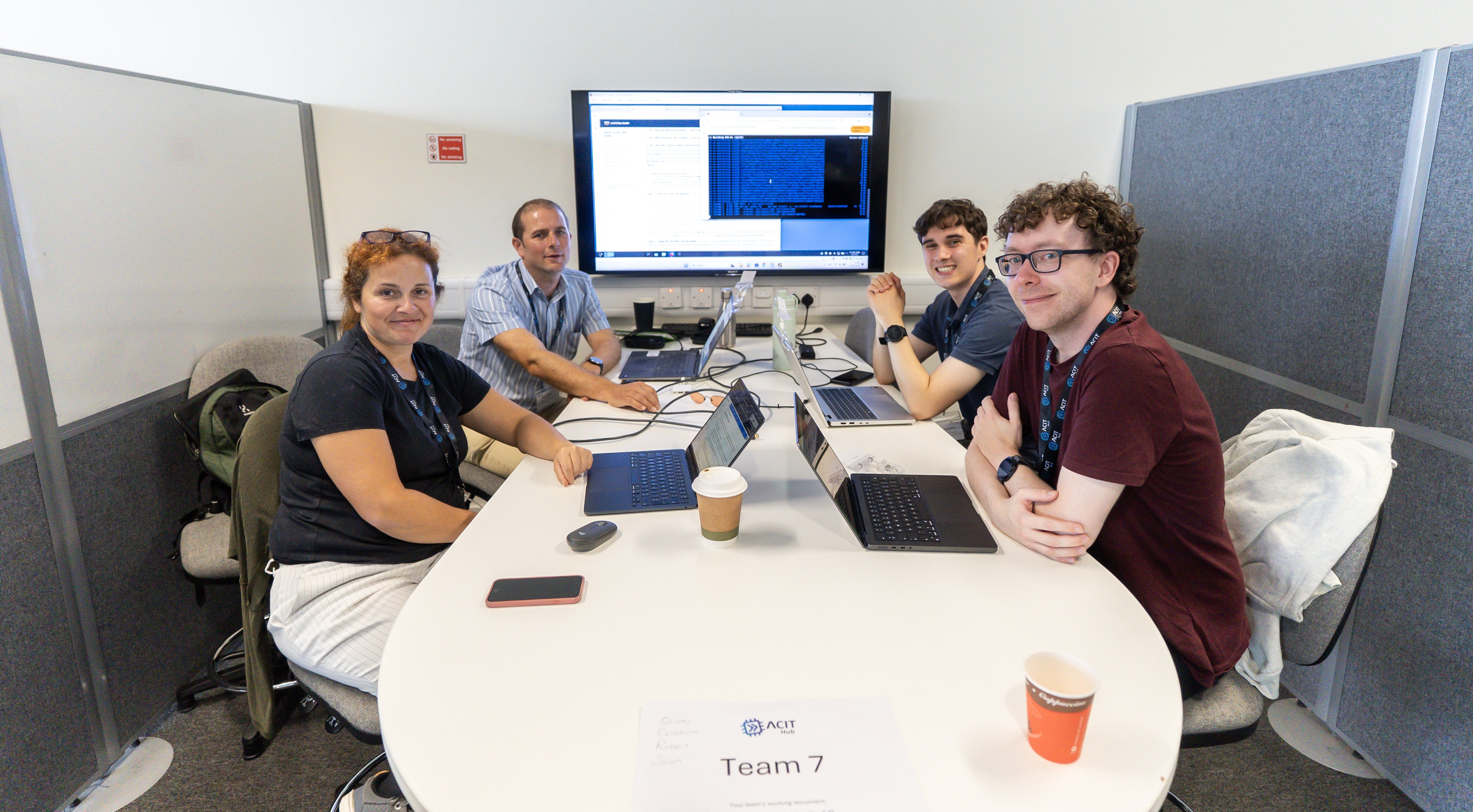
The hackathon was suitable for RIEs at any stage of their career who work with Slurm based HPCs, including those with experience of Kubernetes and Slinky who wanted to share their knowledge and dedicate time to explore these tools further in a non-production environment. Teams were made up of participants with a range of different experiences to support peer-to-peer learning.
Prior to the hackathon there was a pre-event webinar (open to non-hackathon participants too), which introduced the core concepts of Slinky. To ensure that on the day itself, participants could make the most of the dedicated exploration time.
The Hackathon
The hackathon took place across two locations; the University of Surrey and Sheffield University.
Attendees started the day by meeting their teams, followed by details for accessing their team's AWS compute resources and an introduction to the tutorial that would get them started, presented by Emma Arrigo, AWS.
Throughout the day, attendees were supported by experts from AWS, Nvidia, The Ellison Institute of Technology, and StackHPC. Some questions were asked through a Q&A document that all attendees and experts could access; the Q&A document is available to view.
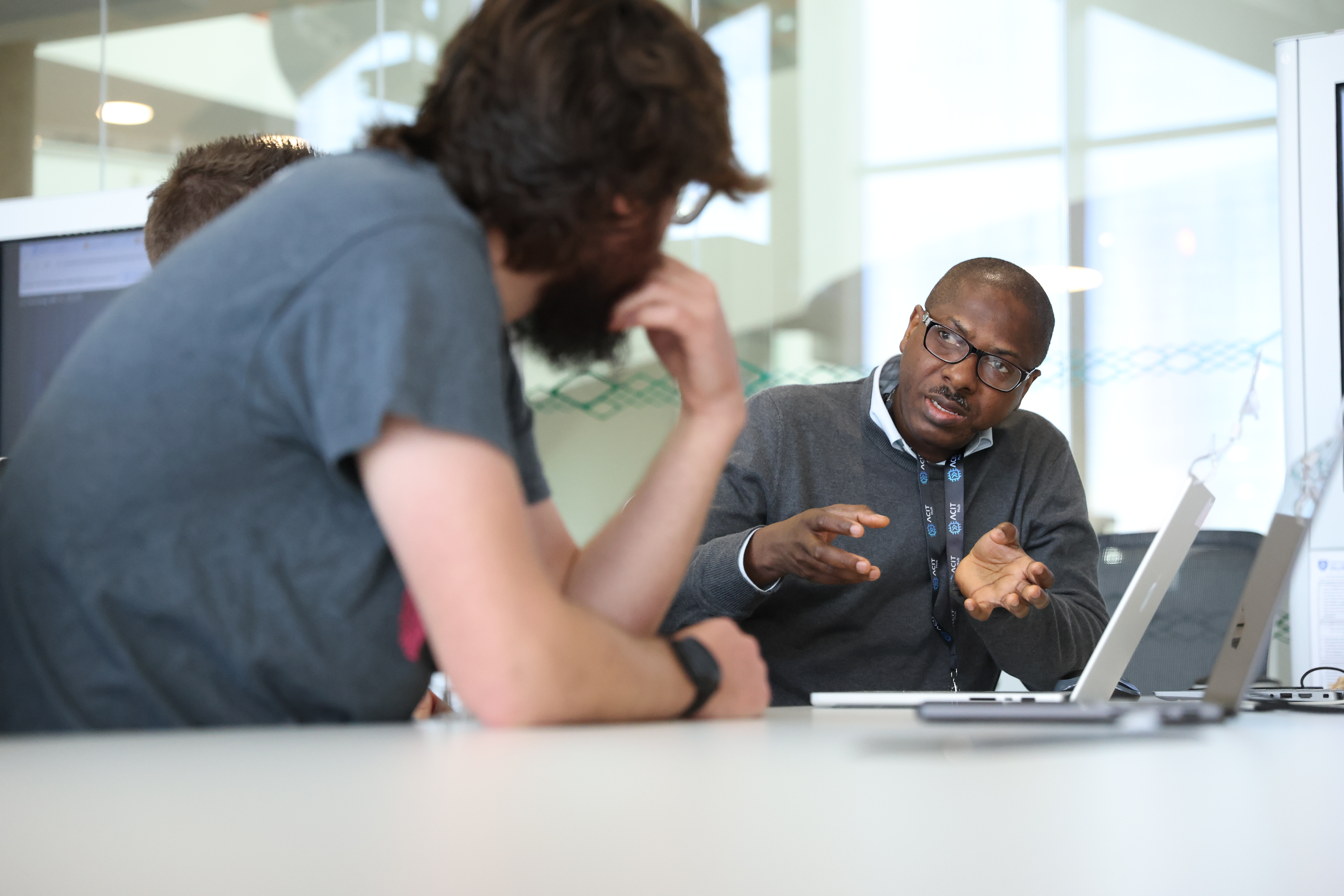
The hackathon gave attendees time to focus on Slinky, but breaks in the day's schedule also gave attendees lots of time to chat more generally with the experts and RIEs from other institutes they wouldn't usually have the opportunity to meet.
Towards the end of the day, all teams gave a short report on what their team had achieved during the day, key learnings, issues or limitations, and an open question or concern. All teams successfully deployed a Kubernetes cluster running Slurm, started running jobs and explored monitoring of jobs using Slurm commands. The reports showed many attendees were keen to explore Slinky further.
To finish the day, Killian Muldoon and Marlow Warnicke, NVIDIA, joined for a Q&A session, in which they answered attendees' questions about Slinky and filled any gaps that had arisen during the hackathon.
Feedback from the hackathon showed attendees enjoyed the day, particularly valuing the opportunity to try something new in a supported environment and meeting other RIEs.